Posts tonen met het label mannaz vzw. Alle posts tonen

maandag 11 maart 2013

ADHD Causes in the Home?

A new study links impulsive behavior in kids to chemicals that may be lurking in your kitchen or on your clothing.

By Emily Main


common house hold chemicals linked to ADHDData just released from the Centers for Disease Control and Prevention (CDC) show that rates of attention-deficit/hyperactivity disorder (ADHD) continue to rise, jumping from 6.7 percent of U.S. children in 2000 to 9 percent of U.S. children in 2009.

As doctors and scientists try to uncover the causes of ADHD, attention is turning to all the chemicals children and pregnant moms encounter in their daily lives. "Certainly there's a genetic component to the disorder," says Brooks Gump, Ph.D., M.P.H., associate professor in the department of public health, food studies, and nutrition at Syracuse University, noting that roughly 50 percent of cases are genetic. "But there are environmental factors involved, as well."

The disorder has already been linked to pesticides found in chemically grown food, and now Gump has shown in a new study that one of the chemical causes of ADHD might be perfluorinated chemicals (PFCs), a class of highly toxic chemicals used to make stain- and water-repellent fabrics and nonstick cookware that linger in the environment for very long periods of time, building up in the blood of animals that enter the food chain and, ultimately, in people.

There have been a few observational studies finding associations between a diagnosis of ADHD and high PFC levels in blood. But Gump's new study, published recently in the journal Environmental Science & Technology, shows real-world situations in which children with high PFC levels exhibited characteristics of the disorder, mainly impulsive behavior.


THE DETAILS: Eighty-three children between the ages of 9 and 11 took part in the study. Blood samples were taken and measured for the presence of 11 different PFCs, including PFOA, used to manufacture Teflon and other nonstick finishes, and PFBS, a chemical made by 3M to replace the toxic PFOS, which was found to cause liver damage and increase chances of infant mortality before 3M phased it out 10 years ago. Then the children took a 20-minute computer test designed to detect something called impaired response inhibition, or impulsive behavior, a primary characteristic of children with ADHD. "What it translates into are risky behaviors that ultimately may translate into things like drug use," says Gump. Children who are too impulsive have also been found to have lower IQs, he adds, and can have difficulty stopping certain behaviors when asked. "For whatever reason, impulsivity is a cognitive process that's particularly sensitive to toxicants."

During the computer game, the children were told they could win 25 cents if they could wait 20 seconds before hitting the space bar, with the potential to win $15 upon completion of the game; responses made sooner than 20 seconds indicated a child with high impulsivity. The authors found that the higher a child's PFC blood level, the shorter his or her response time was, and those children's response times got shorter and shorter as the 20-minute game wore on. The strongest association between the chemicals and impulsive behavior was seen in children with high levels of PFHxS, a PFC that was also made by 3M (and also phased out 10 years ago) that was widely used in carpet treatments and in some forms of food packaging. It was detected at some level in all the children participating in the study, as were PFOA and PFOS.

WHAT IT MEANS
We're just beginning to understand the sometimes-subtle effects of these ever-present chemicals. "PFCs are so prevalent," Gump says. "There's so little research about what the effects of these are on cognitive function, yet everyone has them in their blood." And he adds that the levels of PFCs found in the children in his study are not unusual, based on blood tests conducted on the general public by the CDC. Because these chemicals are so ubiquitous, he wasn't able to determine whether children were being affected by PFCs in their current environment or had been exposed to high levels prenatally. Prenatal exposure, he writes in his study, might explain why these children, born in the late 1990s, when PFC use peaked, are more likely to show signs of ADHD.

A 2008 study has shown that, as with many of the other persistent chemicals that build up in our environment (such as pesticides), contaminated food and water are our primary exposure sources for PFCs. The next-highest source is spray-on water- and stain-repelling clothing treatments and carpet treatments, such as Scotchgard. Third in that list is food packaging: Microwave popcorn, fast-food wrappers, butter wrappers, and pizza boxes may contain PFC-based coatings to prevent grease from soaking through the paper, giving you one more reason not to eat fast food!

Here are a few more ways to avoid exposure to PFCs:
• Eat super-green fish. Researchers are just beginning to understand where the PFCs in our food come from, but it's widely accepted that contaminated fish are a big source of exposure. Choose healthy fish that have low levels of all contaminants to avoid exposure to these unhealthy chemicals.

• Learn to cope with stains. Carpet treatments and after-market stain repellents that we spray on our clothes and furniture could lead to hyperactive kids, as well as moms and dads with thyroid problems. Follow our tips for cleaning clothing and removing carpet stains without resorting to toxic stain-repellent sprays. Also, consult Rodale's Nontoxic Back-to-School Shopping Guide e-book for ideas on outfitting children with rain gear and umbrellas that aren't coated in PFC-based water-repellent coatings.

• Choose healthy cookware. Nonstick pans aren't thought to be a major source of PFC exposure when new, but as the cookware ages and the coatings start to wear off, you might wind up adding PFCs to your dinner without realizing it. Choose healthy cookware that's free of nonstick coatings when replacing your old pots and pans; you might even find it functions better in the kitchen.

vrijdag 8 februari 2013

Save Your Son from the Violent Boy Culture


Increased violence by young males is spinning out of control, especially in the U.S. Since the 1999 Columbine shooting, there have been 31 school shootings. Violence and violent images permeate our society. Boys are constantly bombarded with the false information that real boys must always be strong, aggressive, tough, in control, and repress their feelings. Boys are continually saturated with this distorted version of manhood from television and movies, video games, the Internet, peers, coaches, and other adults.
In the last 15 years the violent video games and movies children have been exposed to have become more graphic than ever. And now the ubiquitous Internet allows our boys to be brainwashed constantly with horrific, savage images of what a man is supposed to be like. One study showed that children in America between the ages of 5 and 18 have watched 20,000 murders and 100,000 acts of violence on television. And violent media does spur real-life aggression. Research has consistently shown that after watching violent movies, children interact in an aggressive manner, while after watching movies about kindness, children treat one another with gentleness and compassion.

Why Boys Act Aggressively

Most boys are taught from an early age to act tough and repress their emotions. It’s important to understand that violent male behavior may stem from the perpetrator’s fear that he isn’t behaving aggressively enough and may be thought of as feminine. However, the behavior that is associated with girls (actions that demonstrate empathy, sensitivity, and compassion) are also natural male traits— they are simply not recognized as such in many societies. Boys need to be taught that sensitivity and compassion are natural male traits.

What Can Parents, Teachers, and Mentors Do?

Mom Can Help Her Son Become Compassionate

Never tolerate anyone shaming your son when he expresses gentle, compassionate behavior. Help your son understand the causes for society’s negativity toward gentleness in males and talk with your son about all of the positive aspects of being a compassionate boy.

Your Son and Violence

Monitor your son’s exposure to violence as much as possible and provide nonviolent games and activities. Encourage your son to hang out with friends who enjoy less-violent games. Frequently discuss the harmful effects that exposure to violence can have on him. Create safety for your son when he engages in potentially dangerous activities, i.e. establish rules for fair fighting.

Ways to Increase Your Son’s Empathy

Taking care of a pet not only teaches a boy responsibility, but through cuddling a kitten, for example, he will learn about the sanctity of all life. Caring for a pet will make him less likely to mistreat an animal. Have your son interact with people of different faiths, nationalities, and races, to learn the commonality of humanity. Expose your son to the arts. Increase your son’s respect for Mother Nature by visiting an orchard, or nursery, spending time at a lake, river, or the ocean, or gardening.

Dad Raising an Empathic Boy

Talk often with your boy about what it really means to be a man. Reassure him that he doesn’t need the approval of aggressive boys, star athletes, or the alpha male to feel good about himself. Let your son know that it’s okay for him to express fear and sadness and ask for help. Discuss with your son the detrimental consequences of violent males being so frequently extolled in the media. Read books or watch movies with your son about the lives of great spiritual men, i.e. Jesus, St. Francis, Moses, the Buddha, and discuss how they have created peace on Earth through righteous behavior.

Help Your Son Navigate the Cruel Boy Culture

Make sure you always defend your boy if others shame him when he expresses his feelings. Teach your son how to respond to aggressive children by role-playing with him. Model setting limits with others so that your son will learn how to set boundaries with violent peers. Let your son know that it’s okay to set personal boundaries with others rather than going along with peer pressure.

Father-Son Activities

To increase your son’s compassionate nature, it would be good sometimes to do activities with your son that help people, animals, and the environment, such as planting trees or cleaning up trash in your community. Volunteer to help out in a hospital, nursing home, or animal shelter. If you have carpentry skills, you and your son could help a neighbor, friend, or relative fix up their house or your own house.

Teachers Creating a Boy-Friendly Classroom

Since boys learn differently from girls, encourage your son’s teacher to incorporate more movement during instruction and take physical breaks between subjects, incorporating active learning games and more outdoor learning. Creating goals and using games will create motivation. Assemble a team of at least three parents of boys to meet with your son’s teacher and/or principal (or your PTA) to discuss how to make your son’s class more boy- friendly.

Learning Compassion in the Classroom

Encourage your son’s teacher to create a class constitution with the help of the students, detailing how they should treat one another, and ask the teacher and students to sign it. Suggest that your son’s teacher give rewards to students for kindness and good sportsmanship. Ask your son’s teachers to read and discuss exciting tales that promote noble and brave qualities of heroes who help others. You and your son’s teacher should let him know that everyone has different abilities and interests and that those differences need to be respected.

Dealing with Bullying

Ask your son’s principal to institute a school-wide no-bullying policy and have all the teachers trained in a bullying-prevention program. Have your son tell a teacher, principal, or lunchroom personnel who can help to stop the abuse. Encourage your son to enlist the help of a friend or a group that can help him to stand up to bullies. Let your son know that bullies feel worthless and the only way they can feel important is by hurting others.

Create a New, Nonviolent World

Once the younger generation learns that love and compassion for all living beings is the most important value every person must imbibe, there will be a veritable leap in consciousness on the planet. Wars and conflicts will become a thing of the past, because wars begin in the minds of people, and there is no room for human or environmental destruction in the political or corporate leader with a consciousness saturated with love and compassion for all human beings and Mother Earth.
Ted Zeff, Ph.D. is the author of Raise an Emotionally Healthy Boy: Save Your Son from the Violent Boy Culture. For more information please visit the Z-Shop or Amazon.com.

woensdag 30 januari 2013

Raise an Emotionally Healthy Boy: Save Your Son from the Violent Boy Culture.


Introducing a new book by Ted Zeff, Ph.D.: Raise an Emotionally Healthy Boy: Save Your Son from the Violent Boy Culture. The book contains hundreds of practical methods to help parents raise their son to express his emotions and develop compassionate behavior, as well as specific strategies to help boys navigate through the violent boy culture. The book is available on amazon:  http://www.amzn.com/096607453X/?&tag=hspsurvivalco-20
at Barnes & Noble or by visiting www.drtedzeff.com.

Are you concerned that your son is constantly bombarded with false information that real boys must always be strong, aggressive, tough, and repress their feelings? What can parents do when their son is exposed to graphic, violent images of what a man is supposed to be like? How can parents help their son grow into an emotionally healthy, compassionate man when he is continually saturated with this distorted version of manhood from television, computer games, the Internet, movies, peers, coaches, and other adults?

In this groundbreaking book, psychologist Ted Zeff provides parents, educators, and mentors with many original and proven methods that will help boys grow into compassionate and emotionally healthy men who can transcend violent male behavior. Dr. Zeff offers practical advice that will help boys express their feelings, exhibit empathy, and increase their self-esteem in the family, at school, with friends, and in sports.

“Proven techniques to help parents raise their son to express his emotions and develop compassionate behavior, and specific strategies that will help boys to navigate through the violent boy culture.”
-Michael Gurian, author of The Wonder of Boys

Raise an Emotionally Healthy Boy” is a boon for our entire planet. The book provides many original, practical ideas for parents and teachers to help boys grow into compassionate and emotionally healthy men who can transcend male violent behavior. Give a copy to everyone you know who is helping to raise a boy.”
-Elaine Aron, Ph.D., author of The Highly Sensitive Child

“I met Ted Zeff when we both worked with youth in San Francisco 30 years ago. He was a great counselor then and now he is even a greater counselor and writer. His insights into raising young men are what is needed now. Trust me, I have been all over the United States making documentaries for PBS on reducing violence in schools. I implore you to listen to his excellent suggestions to raise compassionate, non-violent boys. He's right on.”
-Mike Pritchard, Host of PBS Documentary Save Our Schools from Hate and Violence and Stepping on Up


“Ted Zeff has provided everyone who cares about kids with an excellent road map to get us closer to a society where our boys become more fully human, more emotionally intelligent. That would mean a world of men better able to protect the planet and the next generation from the kind of emotionally disconnected aggression that threatens us all.”
-James Garbarino, PhD, Professor of Psychology, Loyola University Chicago, and author of Lost Boys


Thank you for your interest.

Ted Zeff, Ph.D.
www.drtedzeff.com   

zondag 12 augustus 2012

Understanding the Highly Sensitivity Person: Sensitive, Introverted, or Both?

Today I would like to share a post by Elaine Aron as published in Psychology Today Published on July 21, 2011 by Elaine N. Aron, Ph.D. in Attending to the Undervalued Self


A fresh approach to those times when you doubt your own worth

woensdag 15 februari 2012

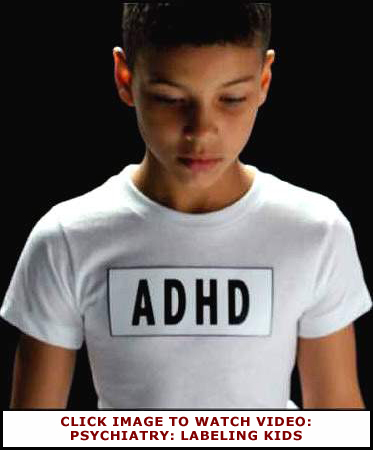
Labeling Kids with Bogus 'Mental Disorders'


20 million children are labeled with "mental disorders" that are based solely on a checklist of behaviors. There are no brain scans, x-rays, genetic or blood tests that can prove they are mentally ill, yet these children are prescribed dangerous and life-threatening psychiatric drugs. Child drugging is a $4.8 billion-a-year industry.

1) THERE ARE NO TESTS IN EXISTENCE THAT CAN PROVE MENTAL “DISORDERS” ARE MEDICAL CONDITIONS.   PSYCHIATRIC DIAGNOSIS IS BASED SOLELY ON OPINION.
The psychiatric/pharmaceutical industry spends billions of dollars a year in order to convince the public, legislators and the press that psychiatric disorders such as Bi-Polar Disorder, Depression, Attention Deficit Disorder (ADD/ADHD), Post Traumatic Stress Disorder, etc., are medical diseases on par with verifiable medical conditions such as cancer, diabetes and heart disease.  This is simply a way to maintain their hold on a $84 billion dollar-a-year psychiatric drug industry that is based on marketing and not science.  Unlike real medical disease, there are no scientific tests to verify the medical existence of any psychiatric disorder.   Despite decades of trying to prove mental disorders are biological brain conditions, due to chemical imbalances or genetic factors, psychiatry has failed to prove  even one of their hundreds of so-called mental disorders is due to a faulty or “chemically imbalanced” brain.   To counter this obvious flaw in their push to medicalize behaviors, the psychiatric industry will claim that there are certain medical conditions that do not have a verifiable test so this is why there isn’t one for “mental illness.”  This is frankly a lame argument; Whereas there may be rare medical conditions that do not have a verifiable medical test, there are virtually no psychiatric disorders that can be verified medically as a physical abnormality/disease. Not one.
In fact the “brain scans” that have been pawned off as evidence that schizophrenia or depression are brain diseases, are simply bogus.  Most have not been done on drug naive patients, meaning someone who has not been on psychiatric drugs such as antipsychotic drugs, documented to cause brain atrophy (shrinkage).  Other brain scans have shown the brains of smaller children to show smaller brains in comparison to larger/older children and then claimed children with ADHD have smaller brains. None have been conclusively proven to verify mental disorders as abnormalities of the brain.
If there were such verifiable brain scans, or in fact any medical/scientific test that could show a physical/medical abnormality for any psychiatric disorder, the public would be getting such tests prior to being administered psychiatric drugs.
This is fact: There are no genetic tests, no brain scans, blood tests, chemical imbalance tests or X-rays that can scientifically/medically prove that any psychiatric disorder is a medical condition.  Period.  Whereas real diseases are discovered in labs, psychiatric disorders are invented by committee and voted into existence.


2. YES, PEOPLE CAN GET DEPRESSED, SAD, ANXIOUS AND EVEN ACT PSYCHOTIC.  THAT DOESN’T MAKE THEM  MENTALLY “DISEASED”

No one is saying that people don’t get depressed, sad, troubled, anxious, nervous or even sometimes act psychotic.  The question then is simple—is this  due to some mental “disease” that can be verified as one would verify cancer or a real medical condition?  And the answer is No.   For example, can soldiers returning from war experience extreme and often debilitating stress?  Yes.  It is something wrong with their brain?  No.  It’s the horrors of war. Can children become distracted and not pay attention?  Since time immemorial, the answer is yes.  But psychiatry has pathologized childhood behaviors into a “mental illness.”   The same is true of mothers.  Can a new mother become distraught after a joyous occasion such as the birth of a child?  Yes.  Is it a brain abnormality or mental disease?  No. And is the most humane solution to put these people on drugs documented by international regulatory agencies to cause mania, psychosis, worsening depression, heart attack, stroke, sudden death?  Or for new or nursing mothers to risk birth defects or damage to their infants from being prescribed such powerful drugs?
This is also true of people diagnosed “schizophrenic.” There is no medical test to verify someone has a brain abnormality or medical condition of schizophrenia. And while no one claims  people can’t become psychotic, the fact remains there is no biological evidence to support schizophrenia as a brain disease or chemical abnormality.  And consider this, if people do become psychotic, or irrational,  is it in fact caused by some  underlying medical (not psychiatric) problem?   And why did a 15-year multiple follow up study find that there was a 40% recovery rate for those diagnosed schizophrenic who did not take antipsychotics, versus a 5% rate for those who did?  What happened to their supposed “brain disease?” Did it simply vanish?  Moreover, if they could recover from such a mental state, do they deserve the “stigma” of “schizophrenia” still being part of their permanent medical record?  For life?   Think about it.  Imagine you were extremely overweight—obese.  You lose all the weight so you are no longer obese.  Yet your medical records continue to say that you are.
And if schizophrenia is in fact a “disease” despite the fact there is no medical or biological evidence (note we did not say speculation, or theories, but evidence) then why is it that psychiatrist Loren Mosher, the former Chief of Schizophrenia Research for the National Institute of Mental Health (NIMH) would openly state there is no biological condition of schizophrenia as a disease or brain malfunction? And why didn’t the mental health industry take advantage of his 2-year-outcome studies proving that those diagnosed schizophrenic could recover without the use of drugs? Is it because this proved that recovery was possible and thereby disproved the theory that something was wrong with their brain? Or was it the fact that they recovered without the use of drugs, thereby threatening a multi-billion dollar pharmaceutical industry?  Maybe this explains why Mosher was fired from his position at NIMH.


3. THE CAMPAIGN TO “STOP THE STIGMA OF MENTAL ILLNESS” IS BROUGHT TO YOU BY… BIG PHARMA
With a seemingly altruistic agenda, the fact is the campaign to end the “stigma” of mental illness is one driven and funded by those who benefit from more and more people being labeled mentally ill—pharma, psychiatry and pharmaceutical front groups such as  NAMI and CHADD to name but a few.   For example, take NAMI’s campaign to stop the “stigma” and “end discrimination” against the mentally ill—the “Founding Sponsors” were Abbott Labs, Bristol-Myers Squibb, Eli Lilly, Janssen, Pfizer, Novartis, SmithKline Beecham and Wyeth-Ayerst Labs. (For an in-depth look at what else Pharma funds and how this funding not only helps set mental health policies but campaigns such as this, read Pharmaceutical Industry Agenda Setting in Mental Health Policies at the bottom of this post)
The fact is that the  “stigmatization ” is coming from those that benefit from people being labeled/stigmatized with mental disorders that have no medical/biological evidence. Case in point, if you are rebellious, you are “stigmatized” with the label “oppositional defiant disorder.” If your kid acts like a kid he is “stigmatized” with the label “ADHD.” If you are sad, unhappy (even temporarily) you are “stigmatized” with the label “depressive” or “bi-polar disorder.” If you are shy you are “stigmatized” with the label “social anxiety disorder.” Moreover, you or your child are now stigmatized for life as this label, which is based solely on opinion, is now part of your medical record, despite the fact there is no medical evidence to prove you are “mentally ill”.


4. PSYCHIATRIC “LABELS” ARE THE PROBLEM
Increasing numbers of people  realize that just because a child fidgets, or loses pencils or toys—criteria for an “ADHD” diagnoses, this doesn’t mean a child is mentally ill.   In fact many now claim that children  diagnosed  “ADHD” are really suffering from lead toxicity, or allergies, or poor diet, or lack of reading skills, and not a mental “illness.”   The problem is that they continue to use the psychiatric label, ADHD, which stigmatizes a child as “mentally ill.”  If in fact a child suffers from led toxicity, then why not call it lead toxicity?  If he hasn’t been taught to read, why don’t we just say he hasn’t been taught to read?  The same is true of all psychiatric diagnoses—every single psychiatric label stigmatizes the person being labeled.    Psychiatric diagnoses are simply lists of behaviors that psychiatrists have compiled into little lists,  given a name,  added “disorder” on the end— then voted them into their billing bible, the Diagnostic and Statistical Manual of Mental Disorders (DSM)  as “legitimate.”   This is big, big business, but it isn’t even close to legitimate diagnoses.  Not in any medical or scientific context.   A profit making context? Sure.   Because coming up with new lists of behaviors and new “disorders” is the bedrock of the multi-billion dollar psychiatric/pharmaceutical industry.  Its how they get paid.   Remember, no psychiatric label, no billing insurance.  No psychiatric label, no drug prescribed.  So until we stop using these psychiatric labels,  which mean nothing other than what some psychiatrists decided was a mental “illness, ” we will never stop the “stigma.”  Because the psychiatric labels are backed by corporate interests—not medicine, and not science.


5. PSYCHIATRIC DRUGS ARE BIG BUSINESS—AND THE PSYCHIATRIC/PHARMACEUTICAL INDUSTRY IS MAKING A KILLING—$84 BILLION PER YEAR.

The primary reason people take psychiatric drugs is because they’ve been taught to believe they have a medical condition called a psychiatric disorder, which then justifies taking drugs to treat it.  This is a brilliant marketing campaign, but it is not science.  Any drug changes behavior or mood, whether cocaine, alcohol, marijuana or heroin. This does not mean someone who acts or feels differently on cocaine does so because they had a cocaine imbalance which the cocaine then corrected. It means that drugs changes mood, emotion and behavior.  But while the illicit use of drugs is universally frowned upon, and considered a bad way for people to deal with their problems, psychiatric drugs are made out to be “good” drugs, despite the fact many are more addictive than cocaine or heroin, and have side effects that rival such hardcore street drugs as LSD, heroin and crack cocaine.


6.  WHERE TO GET THE FACTS ABOUT PSYCHIATRIC DRUGS RISKS AND SIDE EFFECTS

Because the public has been so mislead by the psychiatric/pharmaceutical industry on the dangers of psychiatric drugs, CCHR has created a one-of-a-kind, easy to search psychiatric drugs side effects database, containing all international studies and drug regulatory warnings that have been issued on both classes of drugs (antidepressants, antipsychotics, anti-anxiety drugs, stimulants, etc) and brand names such as Prozac, Zoloft, Paxil, Risperdal, Seroquel, Ritalin etc.  These are provided by CCHR as a free public service to help people make educated decisions based on facts, not marketing campaigns


7. WHY SAFE, EFFECTIVE TREATMENTS TO MENTAL DIFFICULTIES ARE KEPT BURIED
The larger problem is that the biological drug model (based on the bogus mental disorders are a disease marketing campaign) prevents governments from funding real medical solutions for people experiencing difficulty.  And there are workable, non-harmful medical treatments that do not receive government funding because the psychiatric/pharmaceutical industry spends billions of dollars on advertising and lobbying efforts, including hundreds of their pharma funded “patient’s rights” groups to counter any medical modality that does not support their biological drug model of mental disorders as a disease. Why?  Billions of dollars in revenue for the psycho/pharma industry would be lost. This is an industry that time and again, has been proven to put profit above patients lives.
See various non-drug solutions/alternatives here:
http://www.cchrint.org/alternatives/

Bron: Citizens Commission on Human Rights International

dinsdag 17 januari 2012

Love and Asperger's syndrome


He's gentle, unworldly, highly attentive and charmingly old-fashioned. The catch? The very things that make Keith so attractive to Sarah are symptoms of Asperger's. Anna Moore meets the couples living with this surprisingly common condition

Sarah Hendrickx and Keith Newton sit tilted towards one other, laughing a lot and disappearing down the occasional alley of in-jokes, as couples do when they're still in that early, besotted stage.

Keith has just arrived at Sarah's home in Hove and they're clearly delighted by the prospect of the next few days together. As always, Keith has switched off his mobile phone because, as he puts it, 'my time here is with Sarah'. They won't see anyone else - Keith has no friends of his own and doesn't feel comfortable socialising - but plan to eat lots of chocolate, walk and watch television. 'We spend a lot of time feeling smug,' says Sarah, 'because we see other couples who don't look very happy.'

In a few days, though, Keith will drive back to Wickham, Hampshire, 50 miles away, where he lives alone and works as a computer programmer. This will always be the case. Despite meeting five years ago, they won't 'progress' as other couples do. They'll neither live together nor have children. Although there's only a year between them, at 39 Keith is so gangly, gawky, boyish and cute that he could be ten years younger than he is.

Yet Sarah - who had a child at 19 and has two marriages behind her - is confident that few women could put up with him. 'God, he's so gorgeous he could have anyone - but not for long,' she says, laughing. 'Three or four months max… then, when the conversation turns to homes and babies and bank accounts, he'd be gone!' The two burst into laughter.


It wasn't always like this. The couple met through internet dating and the first stage of their relationship was fiery and fraught. To Sarah, Keith was 'a puzzle'. He'd plainly state that their blissful weekends were enough for him, that he'd never live with her or even move nearer. Sarah frequently found him selfish, cold and distant. Keith found Sarah hard work, demanding and 'screechy'.

Ultimately, only one thing allowed them to start again from scratch - they uncovered the reason for Keith's 'insensitivity', his aloofness, the fact that he could see no future with Sarah nor seemed to want one: Keith has Asperger's syndrome (AS).

Such a late diagnosis is not uncommon. Asperger's - a developmental condition that falls within the autism spectrum - was identified more than 60 years ago but became a standard diagnosis only in 1992 when it entered the World Health Organisation's diagnostic manual. As a result, the majority of adults with the syndrome almost certainly grew up without knowing they had it.
Estimates vary enormously as to the prevalence, but one in 100 people is thought to be on the autism spectrum, and it is more common in males by a ratio of nine to one. People with AS normally have above-average intelligence but great difficulties with empathy, communication and social interaction.

People with AS struggle to understand the unwritten social rules that help most of us act and speak appropriately. They find it hard to decipher figures of speech, facial expressions and tones of voice, and are frequently (but unintentionally) concise and literal to the point of rudeness. Since the 'real world' becomes an extremely stressful place, many retreat into their own safe haven of routine, solitude and obsessive special interests.

Today AS is likely to be recognised in a child, and his school will be told he needs special support. Twenty years ago, however, he'd be the 'geek' who didn't quite fit but was left to get on with it. And that struggle has continued into adulthood. For someone with AS, the minefield of relationships, marriage and parenthood can be the hardest part of all.

Louise Corbett manages the National Autistic Society (NAS) helpline and confirms that more calls are coming from couples who have recognised Asperger's in their relationship.
'When I started six years ago most of our calls were made by parents about their children,' she says. 'Now we get more adult-related calls than child-related.' As Asperger's seems to run in families, many women identify it in their husbands - or their husbands see it in themselves - only after their child has been diagnosed and they've read the literature. 'They call in absolute shock,' says Corbett. 'Often they've been experiencing difficulties for years without knowing why. There's no way around it: Asperger's can be very hard to live with.'

Maxine Aston, the author of Aspergers in Love (Jessica Kingsley, £14.95), is one of the few counsellors to work specifically with couples affected by AS. Her surveys and questionnaires from the past decade suggest that 75 per cent of such couples seek counselling. 'I'd almost say AS was a "relationship disorder",' she says. 'It affects communication, interaction and the ability to empathise. Any research will tell you they're the key ingredients for a successful relationship.' In Aston's experience - and desperate clients come from as far as Japan, New Zealand and Canada - Asperger's relationships follow a common pattern.
'A huge number seem to meet on dating websites,' she says. 'For someone with AS it's the perfect route.' Where once many people with AS were effectively barred from the dating game, the internet now provides the perfect point of entry (it has, as Aston puts it 'opened the floodgates').

Bypassing the enormous challenges involved in chatting someone up, it allows you to make a checklist and then select according to criteria. Although many people with AS are unemployed or underemployed, others are at the top of their profession. 'On paper they look amazing,' says Aston. 'Doctors, IT consultants, engineers, solicitors… They could be in their forties but have never married - so no baggage. The internet also allows them to build a rapport by email,' she continues. 'When they meet, women are often very charmed by this polite, gentle man with an old-fashioned appeal.'

This was certainly true for Sarah who found Keith completely different to anyone she had known. 'At the end of our first date he kissed my cheek and shook my hand,' she recalls. 'So different to all the guys that ply you with rioja. Keith seemed so untouched by needless fashion and peer pressure - I thought he was a Buddhist!'

However, in Aston's experience, this appeal can wear thin. 'Women fall in love and want to nurture this unworldly, slightly vulnerable man and help him grow up. As the relationship settles, though, they often find their own emotional needs aren't being met.
'Someone with AS probably has good intentions,' she goes on. 'He wants to make her happy but can't read the signs. At the beginning of the courtship the woman could become his obsession and she has probably never experienced such attention. Five years down the line, when he has focussed on something else and returns from work, yet again forgets to say hello and goes to the garage to take the car apart, things are very different. Women often say to me, "He's either got Asperger's or he's the most selfish man on the planet."'

Another problem can be the isolation. People with AS frequently have sensory difficulties - loud noise, strong smells and bright lights can be almost painful. This, coupled with difficulties in social interaction, means that parties, family gatherings and big birthdays drop off the radar.

'I once saw a couple in their eighties who, after 50 years of marriage, realised what the problem was,' says Aston. 'They decided to stay together, but she bought a cottage up the road and he visited for meals. She could have friends and family over and he had space for his routine and interests. Quite a few couples decide to stay together but live apart.'

Penny Jones, an accountant from Oxford, tried this, following the diagnosis of her husband Chris, an IT consultant, six years ago. Chris learnt about AS through a television programme while he was off work with stress. He subsequently saw a specialist who placed him high on the Asperger's scale.

'We got together in 1995 and he'd always been very unusual,' says Penny. 'There are lots of positives about Asperger's. I like its straightforwardness. There's no game-playing. Chris was the first person I had met who just let people be themselves. Most men want you to be a bit more like this or more like that. Chris just accepts you. He's also very intelligent - he has an IQ of over 150 - and very funny.'

However, AS was hard to live with. 'He did lock himself in the room with the computer,' she says. 'We were under the same roof but not together. Rarely did we share the preparation and clearing away of meals because Chris couldn't stand the noise of cutlery and crockery.'
When their children were born - Luke is nine and Beth is seven - Chris found the chaos of family life even more difficult. 'It wasn't predictable and calm enough. Family holidays we gave up on,' she says. 'He would try his best but by day three, without his familiarity, his routine, his computer, you could see all his systems shutting down. Then he'd spend each day with a large crate of beer in front of the television while I took the children out. Chris drank vast quantities to cope with Asperger's - that was another problem.'

When Chris moved out, the plan had been that they would remain a couple, but in the end this didn't work out. 'He drank far less and was clearly so much happier in his own space,' says Penny. 'He would spend a few hours with us, then go home to his bolthole and not talk to anyone for 24 hours. In the end, I couldn't cope with the massive periods of time alone.' The couple divorced last year.

Conventional counselling isn't recommended for AS couples - in fact, it frequently makes things worse. 'Counselling works on empathy,' says Maxine Aston, 'helping you understand each other's point of view. That won't happen if you have AS. You might be told to spend ten minutes a day talking about your emotions. Someone with AS can't do it, feels pressurised and disappointment sets in.' For this reason, the NAS has a (small) database of couples counsellors who specialise in AS - of which Aston is one.

There are many strategies that can help. One is to write things down instead of saying them. Another is for the non-Asperger's half in the relationship to spell things out in no uncertain terms. ('I am feeling sad and would like a hug'), rather than hope their partner will read the cues. However, the key is understanding the Asperger's label, accepting its limitations and adjusting expectations. 'It's almost like blaming it on the Asperger's,' says Aston.
The diagnosis that saved Keith and Sarah almost happened by accident - Sarah got a job working with ASpire, a charity that supports adults with Asperger's. The more she learnt, the more she recognised in Keith. 'At first, I thought it was just a mad, crazy Sarah idea,' he says. 'But as I researched it, the similarities became too great to ignore.'

Learning about AS, he says, was 'life-changing'. Suddenly what Sarah describes as his 'isolated, biscuit-eating life' made sense. Keith had been bullied at school and gone through university with no friends at all. He'd had only two jobs in his life doing the same thing and two very short-lived relationships (the first at 31). 'From an early age you try to join the world, but gradually, with rejection and not being able to understand social situations, it becomes too taxing,' he says. 'I wanted relationships with women but didn't have the confidence, the tools or the means.'

In Sarah, Keith has found the perfect partner. She works with AS adults for a living and now understands his thought processes and almost speaks his language. She can foresee stressful situations, accepts his frequent need to be alone and rarely asks for more than Keith can give.

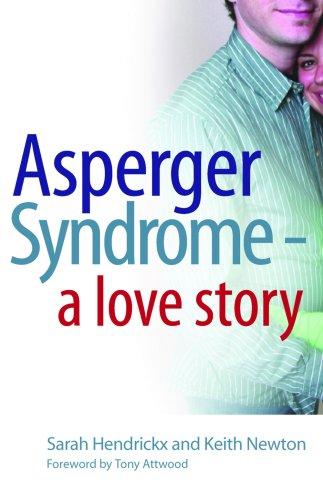
In return, she has a charming, quirky, logical and attentive partner who is still touchingly old-fashioned - he always opens doors for her, carries her shopping and whips off her glasses to clean them if he sees they are dirty. Most importantly, the two clearly love each other's company, share the same sense of humour - and have co-written a book, Asperger Syndrome - A Love Story (Jessica Kingsley, £12.99), to show that happy endings are possible, even if they're not quite the endings originally envisaged.

There are no plans of marriage or moving in, and Keith certainly doesn't think he could cope with children. But they seem like soul mates. 'With Sarah, I get acceptance and understanding,' says Keith. 'I don't necessarily want to join the rest of the world - but I'd like someone to join me in mine. I'd like to know at the end of my life that there's been one person who got me. That's what Sarah does for me.'


You can order the book by clicking the link


http://www.telegraph.co.uk/health/3354140/Love-and-Aspergers-syndrome.html

zondag 15 januari 2012

Spatial Strengths

Spatial Strengths

Vivid Imagination

Picture thinkers have great—often wild—imaginations. They form strong, vibrant mental pictures that are often on the move. They make their own mind-movies as they read and listen. These mental movies can include voice-overs, close-ups, split screens, or panoramic shots. Anything they’ve ever seen on a screen they can imagine and use, including a zoom-in to enlarge something, an overlay of two or more images, transformation of one thing into another, rotation to see the other side of something, cartoon animation, or a graphic they can enter like a video game. They can organize information visually—laid out on an inner computer screen—and then file it away mentally to pull out later (handy for tests). Some picture thinkers may not know they have this mental computer capacity—so hampered are they by trying to listen and take notes at the same time (and then outline!). Picture Thinker’s spatial imaginations can run away with them in great leaps from one fantasy to another, but when under control, there is almost nothing they cannot bring into play in the arena of their mind’s eye.

Visualization

Visualization takes imagination a step further. Picture thinkers are wonderful visualizers, although some need to be taught this skill to jumpstart it. Visualization is the most versatile tool in the picture thinker tool kit. It can be applied in every subject area in school and in life in general. Tapping into what you have visualized provides immediate rich experience that can be examined whenever you want to . It is the basis of a kind of mental organization and storage of information, ideas, and their interconnections that is like a computer and imitates a computer’s worldwide web potential.
There are two parts to visualization. There is the “cognitive scratch pad” that is like your computer screen where you input what you see. Then there is the long term storage of all the visuals that is like your computer memory. Visualization is so important that we devote an entire section of this book to the wonders of this tool. There we include sample classroom activities that build visualization skills, and we show how to use visualization in a wide variety of school situations. Here, we are just want to emphasize how important it is as a visual-spatial tool. Visualizing will work for all kinds of thinkers, but is home territory for picture thinkers.
One point. Good visual memory is needed for successful visualization. There are some picture thinkers, usually impatient ones, who never look at anything long enough to make an image. They just play with speed-of-light perceptions. These picture thinkers may need help to look “just a few nano-seconds longer” to form a real memory. Once this trick is learned, they will quickly pick up their innate visualization skills and then will be off and running.

Seeing the Big Picture

Perhaps this goes back to hunter-gatherer days. Upon encountering something new—a new subject, a new experience, some unknown object—picture thinkers want to know right away what that thing is. They want to get to the heart of it, what it IS. Once that need is satisfied, they can sit back and learn about the details, all the bits and pieces that part of the picture. To understand anything, they need to get its big picture first, which is why they ask so many questions. They are trying to hook this new thing to something that they already know. This questioning can be a frustrating time for them. They can feel stupid, impatient, upset, tense, as they “circle around something new,” trying out various viewpoints. Because they are active learners, not wanting to have ready-made explanations handed to them, they are hard to teach. They insist in understanding it in their own way.
It is hard for picture thinkers to experience significance if only parts are available to them without the essential whole. Remembering a detail and then attaching another detail doesn’t work for them. They must size the whole situation up and sort out what feels important to understand for themselves what something is about, and to make the right connections. Often they suddenly “see” the whole thing all at once, with everything in its place. Aha!

3-D Mastery

Although they may be called picture thinkers, visual-spatial learners are oriented to the dimension of space and see in 3D. Their world is far more complex than the flat worksheets or textbook pages in a classroom. Spatials often “see” ideas in a 3-dimensions like computer animation with depth. They look through both real and imagined space to see the whole of something and to check out the relationships and connections. This creates “inner territory” to explore. Picture thinkers can quickly scan all that their senses have taken in—seeing, hearing, smelling, tasting, feeling, sensing—and mentally connect the dots that spell out what is going on, or what the essence of something is We all do this all the time to some extent. It is called “perception.” But picture thinkers do it in spades. They take in 360 degrees of the space that surrounds them, making their input enormously richer and at the same time, more challenging to analyze. Having to pay attention a small set of details (like periods at the end of sentences) can feel like being pulled back from their normal range of awareness to a trivial pursuit. That tiny part better be important, or they discard it to return to scanning for significance.
Sometimes seen as having poor organization skills, picture thinkers have their order. It centers around significance, an emotional response. Rather than outline as step-by-step learners do, where main ideas stand out like trees on the plain, spatials respond to feelings about importance. If something strikes them as worthwhile, it becomes part of their web of essentials, a mental map of things worth paying attention to. Instead of outlines—so comfortable to the stepwise —a picture thinker’s scheme of reality is more like a 3D star map. The various stars and constellations stand out in different degrees of brightness, all shining against the dark space surrounding them and all interconnected in some way. Those connections are based on feelings and sensed importance.
At times, picture thinkers not only see but feel their way through concepts. They have kinesthetic input like those cyberspace reality games that evoke muscle response to what players “experience.” These spatials grope through space as if they could touch ideas and possibilities to find what is there. Einstein, who could visualize thought experiments, spoke of using “a kind of imagistic, kinesthetic shorthand” in his thinking process. (He was groping for words, typical of spatials when trying to explain themselves.) It seems he was trying to express the visual-spatial experience of thinking, seeing in imagination, and feeling muscular response to ideas. It is interesting that he recognized this as like “shorthand”—very minute, partial symbols, and tiny, nuanced muscle responses that could mark sensed relationships and also hold them in memory for future use. Spatials’ shorthand is different!
Certainly not all picture thinkers are Einsteins, but this explorative mode of operation is true for many of them, especially the deep thinkers and long processors. (They are covering a lot of mental territory and this takes time.) Thinking in 3-D mode means that all sorts of connections can be made in any dimension. Quantum physics and string theory would make us aware of more than 3 dimensions Spatials may lead the way to extraordinary feats of inner space exploration, making its complexity more approachable to us all, but that is another story.

Seeing Relationships

When spatials get the big picture, they see the whole of something and how the parts fit together. The relationship of the parts to each other and to the whole comes naturally to them. That is the way things are. They often think about putting something together with something else, like a cook trying out a new recipe. They wonder what that new relationship might like—how each would affect the other. Rather than sort things into categories, their most natural mode of thinking is to consider various new combinations of parts and what the flavor of the new relationship would be. Their ability to invent and explore goes along with this curiosity about how something might affect something else. For them, everything is interconnected and, of course, related. They are very aware of personal relationships among people as well as how things relate to one another. While they can become very good at sorting into categories, this skill is secondary to that of recognizing the balance of relationships.

Pattern Recognition

Scanning and the search for significance combine to produce a talent for pattern recognition in picture thinkers. It is part of their awareness of connections. If a pattern (recurring connection) exists, they will see it. This means, for one thing, that they will learn math facts better when made aware of the interconnecting number patterns than through rote memorization. Playing games that use number patterns works far better for these emotionally attuned learners than drilling, since their memories don’t hold isolated, disconnected facts. Picture thinkers immediately recognize patterns that are pointed out to them but really excel in finding their own, often seeing connections among things that are overlooked by others. Once pointed out, the connections make sense to others who wonder why they never noticed that.

Out-of-Box Thinking

An important aspect in understanding picture thinkers is that they need to think in their own way. They are uncomfortable with following some one else’s line of thought, partly because such linear thinking is not the way their minds operate. Sometimes they really just can’t follow along step by step. They can take in each step but without that Big Picture, the steps fade away. They don’t remember details well unless those details vibrate with significance, are tagged with their own feelings, or are part of as sudden gestalt. Picture thinkers blaze their own thought trail. Most need processing time to put together their own Big Picture. There seem to be no real steps in their thinking. Often they have a sudden insight that “things go together like this!” Either slowly or in a flash, a whole concept emerges, which may be brilliant or flawed. Picture thinkers need help in proving (or discarding) their new ideas. Trying them out is a good strategy in teaching them. If their idea actually works in a variety of situations, then it has validity. If not, it’s back to the spatial drawing board.
The tendency to originality can make teachers uncomfortable. Not only does it throw off lesson plans, but there is often an uncomfortable feeling that they are not doing their job, not teaching them. Shouldn’t they be the ones to tell spatials what they should know? They aren’t sure spatials have “got it right.” It is helpful to give spatials some processing time and to let them work in their own way, while insisting that they apply and test their ideas.

Radar Scanning

It is as if picture thinkers have radar out always scanning the environment, taking in every little thing. They are alert for changes, shifts in energy, or tones of voice in everything around them. They easily notice if some little thing they saw yesterday is missing today. They scan for signals that something is going to happen as well as for the general feel of things. They absorb what’s going on, intensely immersed in that experience. At school, if the lesson of the day can enter into their experience, these emotional picture thinkers will take it in and remember it forever. Otherwise, scanning makes picture thinkers vulnerable to distractibility. Their attention may be captured by all sorts of things. They can be equally aware of a bug bite on their arm, the way the lights are humming, someone’s simmering anger three rows away, or the relationship of a radius to its circumference.

Emotional Intensity

Picture thinkers live emotionally. They do not shut their feelings away to examine later. Instead, their emotions enliven, interpret, and underscore their experience all the time. Their emotions affect the way they think. Moods intertwine with learning, which means that their thinking can take off when they feel upbeat and confident. On the other hand, if they are upset, confused, angry, or depressed, picture thinkers may have difficulty learning much at all. It is as if their mind shuts down then, not able to function until their feelings are more positive. This may be why they try to liven things up with humor, games, tricks, and drama. Positive vibes just help them to learn better. It follows that picture thinkers will have days when they learn poorly, just as they will have days of remarkable accomplishment. Those around need to learn that variability is the name of the game..

Gamesmanship

Picture thinkers want life to be upbeat. They love humor, fun, excitement, and challenge. They are affronted by dullness and drudgery and will often sabotage a dreary atmosphere, creating excitement of some sort. They were usually happy, cheerful, fun-loving bon vivants as toddlers. Just as then, t hey have boundless curiosity, are natural explorers, and delight in discovery and excitement. Positive feelings are very important to them, partly because when they are down, they can be so very down. Their desire to liven things up—often by playing the clown or stirring up arguments—can be very annoying to a teacher with a lesson to impart, but they are (mostly) not behaving this way to be obstructive. They want life to be lively. Situations where games and play are used to aid comprehension or solve problems draw out the best in them. Teachers do well to make the most of picture thinkers’ creativity, out-of-the-box thinking, and solutions that seem to come from nowhere. They add excitement and interest to learning.
In a classroom, hands-on participatory lessons work well for them—and for step-by-step learners too. Simulation games, board games created by students as part of a learning project, hands-on immersion learning situations, contests, construction and designing, art, music, poetry, skits, and dramatic enactment—all meet a deep need of picture thinkers to work in a rich, colorful, and stimulating environment. They remember their own experience best, so experiential lessons make their points memorably. Enlivening activities such as these also spice up things for step-by-step learners, who enjoy but won’t demand this kind of teaching. It is just these lively, upbeat, dramatic personality qualities that draw others to picture thinkers like a magnet. Life is more zestful around them, and classrooms are more exciting.

Source: http://www.visualspatial.org/spatialstrengths.php by

Linda Kreger Silverman, Ph.D.

woensdag 19 oktober 2011

Mandy Moore on depression and sensitivity


Mandy MooreAlong with her success as an actor and musician, Mandy Moore has experienced emotional challenges including depression and sensitivity.
“A few months ago I felt really low, really sad. Depressed for no reason. I’m a very positive person, and I’ve always been glass-half-full. So it was like someone flipped a switch in me.”
She says her recent split with Zach Braff “added to what I was going through, but it’s not the complete reason. It definitely doesn’t help if you’re already in that place.”
Moore, at 22, also spoke of some of the existential issues she is exploring:
“I’ve been going through this really crazy time in my life – it’s what I imagine people fresh out of college go through. I’m asking myself life-altering questions, like Who am I? Where do I fit in this world? What am I doing, what do I want to do? Am I living to my full potential?” [Jane magazine, Feb 2007]
Gifted and talented people are more likely to ask those kinds of questions, and may experience feelings discussed in the article Existential Depression in Gifted Individuals, by James T. Webb, Ph.D. As he notes, “existential depression arises when an individual confronts certain basic issues of existence.. [such as] death, freedom, isolation and meaninglessness.”
Mandy Moore has commented in earlier interviews about her sensitivity:
“I’ll cry at anything, even a tissue commercial. I’m overly sensitive. It’s so easy to hurt my feelings.” [allstarz.org/~mandymoore/]
“I’m extremely-extremely sensitive. I can cry at the drop of a hat. I’m such a girl when it comes to that. Anything upsets me. I cry all the time. I cry when I’m happy too.” [absolutely.net]
“I’m really overly sensitive. I get my feelings hurt very easily, and sometimes I just cry for no reason, and I hate that.” [malaya.com March 21 2004]

Many people equate high sensitivity with exceptional ability. But in her article The Highly Sensitive Child (and Adults, Too): Is Sensitivity the Same as Being Gifted?, Elaine N. Aron, Ph.D. writes that in her experience, “not all highly sensitive people are gifted. That is, at least as adults, many HSPs are not expressing some talent in a way that others would recognize as outstanding.” She also notes high sensitivity occurs in 15 to 20 percent of the population, but a smaller percentage are considered gifted.

But sensitivity is a trait shared by many highly talented, if not gifted, actors and other artists like Moore, and may be part of what makes them so creative.

Bron: http://talentdevelop.com

dinsdag 18 oktober 2011

Gifted People and their Problems


By Francis Heylighen, PhD    [page 1/2]
Highly gifted people have a number of personality traits that set them apart, and that are not obviously connected to the traits of intelligence, IQ, or creativity that are most often used to  define the category.
Many of these traits have to do with their particularly intense feelings and emotions, others with their sometimes awkward social interactions.

These traits make  that these people are typically misunderstood and underestimated by peers, by society, and usually even by themselves. As such, most of their gifts are actually underutilized, and they rarely fulfill their full creative potential.

This is particularly true for gifted women, as they don’t fit the stereotypes that society has either of women or of gifted people (typically seen as men).
The present document is a quick attempt at sketching the overall picture, summarizing the essential characteristics and the kind of problems they tend to give rise to.

While this is mostly a collection of existing material, I intend to prepare a paper offering a novel interpretation of these data on the basis of a cybernetic/cognitive/evolutionary thinking.

Summary of traits
The following is a digest of the traits that are most often listed as characterizing “gifted” or “creative” individuals.
The number of “*” signs indicates how often this trait (or a very similar one) appeared in one of the lists that I found on the web.

I have ordered the traits in different categories, in order to emphasize that these traits extend much further than just intelligence and knowledge (cognition).
As a comparison, I have also included the traits (indicated by a “•”) from Maslow’s description of what he calls the “self-actualizing personality”.

There is obviously a strong overlap in both lists, although Maslow seems to virtually ignore the cognitive traits, while emphasizing the motivational and emotional ones, in accord with his motivation-based theory.
The fact that in spite of this very different basis to establish two personality types, the overlap is so obvious, confirms my own reinterpretation of Maslow’s theory in which I argue that self-actualization requires not only need satisfaction, but cognitive competence, i.e. knowledge and intelligence.
(Heylighen F. (1992): "A Cognitive-Systemic Reconstruction of Maslow's Theory of Self- Actualization", Behavioral Science 37, p. 39-58.)

Cognition

**********• original, unusual ideas, creativity, connects seemingly unrelated ideas
******* superior abilities to reason, generalize or problem solve, high intelligence
****** vivid and rich imagination
****** extensive vocabulary, verbal ability, fascinated by words
***** learns new things rapidly
***** excellent long term memory
**** grasps mathematical/scientific concepts readily, advanced comprehension, insightful
**** avid reader.
*** complex and deep thoughts, abstract thinker
** runs mind on multiple tracks at the same time, fast thinker

Perception/emotion
******* highly sensitive
*******• excellent/unusual sense of humour
******• very perceptive, good sense of observation
*****• passionate, intense feelings
***• sensitive to small changes in environment
*** introverted
**• aware of things that others are not, perceive world differently
**• tolerance for ambiguity & complexity
** can see many sides, considers problems from a number of viewpoints
*• childlike sense of wonder
• openness to experience
• emotional stability, serenity

Motivation/values
********** perfectionistic, sets high standards for self and others
*********• very curious, desire to know
********• very independent, autonomous, less motivated by rewards and praise
*******• seeker of ultimate truths, looks for patterns, meaning in life ******* enjoys challenge, penchant for risk-taking
******• outrage at injustice or moral breaches, good sense of justice
****• wide range of interests, overwhelmed by many interests and abilities
****• strong moral convictions, integrity, honesty
****• high drive
**• visionary, realizes visions, sense of destiny or mission
** loves ideas and ardent discussion
• sincerity
• acceptance of self and others

Activity
******* great deal of energy
******• long attention span, sustains concentration on topics of interest, persistent
**** cannot stop thinking, work myself to exhaustion
***• needs periods of contemplation, solitude
• spontaneity

Social relations
*********• questions rules or authority, asks embarrassing questions, non-conforming
*******• feels different, out of step with others, sense of alienation and loneliness
*****• very compassionate
****• empathy: feels along with others, helps them understand themselves

Quotes from other sources

This is a collection of bits and snippets that I collected from the Web. Emphasis in the longer quotes is mine. Search quote in Google to find its source.

Characteristics of Creative Genius

I have always had an insatiable curiosity.
I am able to run my mind on multiple tracks at the same time.
I learn rapidly and retain / apply what I learn.
I tend to be very independent.
I tend to be less motivated than others are by rewards, bonuses, and praise.
At times I have asked embarrassing questions or rudely pointed out truths at the wrong time.
My preference for the complex can fool me into underestimating the simple answer.
I like to refine and improve others' innovations.
I feel comfortable with a wide range of emotions.
I can see many sides to nearly any issue.
Honesty, integrity, and ethics are important to me.
I can help others understand themselves better.
I am a seeker and champion of ultimate truths.
My nervous system is easily aroused, and I am able to discern the slightest changes in my environment (aromas, shifts in light, etc.) or detect irritants (e.g. scratchy sweater label).
I can feel along with and for others.
I set high standards for myself and for others and am my own worst critic.
I tend to look for consistency and security in systems, rules, and orderliness.
I am often considered a "driven" person. I have maintained my childlike sense of wonder.
I am intent on searching out universal truths.
I am deeply disturbed by inequity, exploitation, corruption, and needless human suffering.
I can and do work myself to exhaustion.
Some people think I'm too serious.
I have always been interested in social reform.
I value and will defend diversity.
I have a strong need to "make a difference."
I have a penchant for risk-taking.
I can and do ignore my own needs for the sake of others.

© LIBERATING EVERYDAY GENIUS TM by Mary-Elaine Jacobsen, Psy.D. - retitled  The Gifted Adult: A Revolutionary Guide for Liberating Everyday Genius

Characteristics of Gifted Adults

Perfectionistic and sets high standards for self and others.
Has strong moral convictions.
Is highly sensitive, perceptive or insightful. Fascinated by words or an avid reader.
Feels out-of-sync with others.
Is very curious.
Has an unusual sense of humour.
A good problem solver.
Has a vivid and rich imagination.
Questions rules or authority.
Has unusual ideas or connects seemingly unrelated ideas.
Thrives on challenge.
Learns new things rapidly.
Has a good long-term memory.
Feels overwhelmed by many interests and abilities.
Is very compassionate.
Feels outrage at moral breaches that the rest of the world seems to take for granted.
Has passionate, intense feelings.
Has a great deal of energy.
Can't switch off thinking.
Feels driven by creativity.
Loves ideas and ardent discussion. Needs periods of contemplation.
Searches for ???? in their life.
Feels a sense of alienation and loneliness.
Is very perceptive.
Feels out of step with others.
© The Gifted Resource Center and Lesley Sword, Ph.D.
[See titles by Lesley Sword on Articles: gifted.]

Normal Behavior for Gifted People

It is NORMAL for Gifted People to:
Have complex and deep thoughts. Feel intense emotions.
Ask lots of questions. Be highly sensitive.
Set high standards for themselves. Have strong moral convictions.
Feel different & out-of-sync.  Be curious. Have a vivid imagination. Question rules or authority. Thrive on challenge.
Feel passion and compassion. Have a great deal of energy.
Have an unusual sense of humour. Feel outrage at injustice.
Look for meaning in life. Feel sad about the state of the world.
Feel a spiritual connection to life.
© The Gifted Resource Center and Lesley Sword, Ph.D

Most Prevalent Characteristics of Giftedness

99.4% learn rapidly
99.4% have extensive vocabulary
99.3% have excellent memory
99.3% reason well
97.9% are curious
96.1% are mature for their age at times
95.9% have an excellent sense of humor
93.8% have a keen sense of observation
93.5% have compassion for others
93.4% have a vivid imagination
93.4% have a long attention span
92.9% have ability with numbers
90.3% are concerned with justice and fairness
89.4% have facility with puzzles and legos
88.4% have a high energy level
88.3% are perfectionistic
85.9% are perseverant in their areas of interest
84.1% question authority
80.3% are avid readers Descriptions
90% were described by their parents as "sensitive."
83% like to concentrate on one activity at a time.
79% report high energy or activity levels.
44% are sensitive to clothing tags and other tactile sensations.

A Glossary of Gifted Education

Giftedness and education from the perspective of sociologic social psychology by Steven M. Nordby © 1997-2002

Levels of giftedness According to IQ measurements, the following labels are generally accepted:
* Bright - 115 and above
* Gifted - 130 and above
* Highly gifted - 145 and above
* Exceptionally gifted -160 and above
* Profoundly gifted - 175 and above

Because of measurement error and ceiling effect, the exceptionally and profoundly gifted labels are often used interchangably.

Characteristics of the gifted
The following characteristics are common but not universal:

* Shows superior abilities to reason, generalize or problem solve.
* Shows persistent intellectual curiosity.
* Has a wide range of interests; develops one or more interests to considerable depth.
* Produces superior written work or has a large vocabulary.
* Reads avidly.
* Learns quickly and retains what is learned.
* Grasps mathematical or scientific concepts readily.
* Shows creative ability or imaginative expression in the arts.
* Sustains concentration for lengthy periods on topics or activities of interest.
* Sets high standards for self.
* Shows initiative, originality, or flexibility in thinking; considers problems from a number of viewpoints.
* Observes keenly and is responsive to new ideas.
* Shows social poise or an ability to communicate with adults in a mature way.
* Enjoys intellectual challenge; shows an alert and subtle sense of humor.

These characteristics can lead to conflicts in the regular classroom, as the gifted child may:

* Get bored with routine tasks.
* Resist changing away from interesting topics or activities.
* Be overly critical of self and others, impatient with failure, perfectionistic.
* Disagree vocally with others, argue with teachers.
* Make jokes or puns at times adults consider inappropriate.
* Be so emotionally sensitive and empathetic that adults consider it over-reaction, may get angry, or cry when things go wrong or seem unfair.
* Ignore details, turn in messy work.
* Reject authority, be non-conforming, stubborn.
* Dominate or withdraw in cooperative learning situations.
* Be highly sensitive to environmental stimuli such as lights or noises.

These reactions of gifted students to the regular education environment are normal only within the context of an understanding of the gifted. Without that understanding, they may be used to label the student as ADD/ADHD or SED. See overexcitabilities.

Overexcitabilities -

A term originated by Kazimierz Dabrowski to describe excessive response to stimuli in five psychic domains (psychomotor, sensual, intellectual, imaginational, and emotional) which may occur singly or in combination.

Overexcitabilities are often used to describe certain characteristics of the gifted. “It is often recognized that gifted and talented people are energetic, enthusiastic, intensely absorbed in their pursuits, endowed with vivid imagination, sensuality, moral sensitivity and emotional vulnerability. . . . [They are] experiencing in a higher key.” - Michael Piechowski.
Extreme overexcitabilities or a strong imbalance between them may reduce the individual's ability to function in society.
The Intellectual and Psychosocial Nature of Extreme Giftedness

Philip M. Powell & Tony Haden Roeper Review , Vol. 6 No. 3, p. 131-133, February 1984.

The highly gifted are rare in the population. Using IQ scores as a gross index to assess this rarity, those with IQ's of 150 and above occur about 5-7 times out of 10,000 persons.

The literature about them is also rare. Nevertheless, the attempt to understand the highly gifted is valuable because it can help us to help them achieve their potential.

It has been reported that the higher the level of giftedness, the greater the chance of psychological and social adjustment difficulties. [...]
Terman and Oden, (1959) found that the four traits which distinguished the gifted from the control group of normal or average children most clearly were:
* General intelligence * Desire to know
* Originality * Common sense
Torrance (1965) has argued that the gifted are independent thinkers. Dunn and Price (1980) provided evidence to show that those of average ability have a greater need for external structure than the intellectually gifted.
One important difference, then, between average persons and their gifted counterparts is in the need of externally imposed structure.

Gifted persons are more likely to make sense out of their intellectual experiences than the average person. Another important difference is in the desire to know complex ideas. Average persons have less desire to know ideas for their own sake.

They substitute participation in social affairs for idea dominance or the preference for thinking and generating ideas argued as characteristic of the mentally gifted (Powell, 1982).
The possession of the desire to know means that gifted individuals have a need to search for the inherent pattern, logic or meaning in a set of data information, while average people prefer to have the pattern, logic, or meaning already generated and explained. [...]

The highly gifted, on the other hand, have the greatest capacity to create structure and organize data and the greatest need to know.
At this extreme, such people can create whole disciplines (De Candolle) and/or frameworks for comprehending the universe (Newton and Einstein). [...]

Another problem for the highly gifted is they grow up with and are often socialized by significant others who do not understand them well enough to guide their ideas and actions with valid feedback.

This was true of Leopold and Loeb, who were given free rein to go and do as they pleased at an early age. Parents can also vacillate between being proud of and being scared of the achievements of the highly gifted child.
Parental pride in achievement can quickly turn to a fear of social stigma which can cause parents to give their gifted child inconsistent feedback. Hence, highly gifted children are never quite sure if it is good or bad to be very bright.

Thus, their concept of the value of being very gifted develops slowly and ambivalently. Peers, especially children, are often confused by the highly gifted person because it is difficult to identify with their superior cognitive abilities.

They may downplay the degree of superiority of the highly gifted by invalidating feedback. If this feedback is internalized, a self-conception may be constructed based on underrating the self.
Clark (1979) reported on a young female student who had spent 18 years believing she was not intelligent because she asked more questions than the others in class.

Later, in Clark's university class, when the characteristics of the gifted were discussed, the woman was so moved that she decided to say that she identified with the gifted even though she knew she was not gifted.

She was so stirred by the class that later that evening she called her parents. During a conversation with them, the woman student found out that she has a measured IQ of 165. School personnel had advised her parents not to discuss her extraordinary IQ with her.

This resulted in a low level of academic seIf-esteem and the ridiculous self-conception of being stupid! [...]
~~~~

As a highly gifted 12 year old described it: “A real friend is a place you go when you need to take off the masks. You can say what you want to your friend because you know that your friend will really listen and even if he doesn’t like what you say, he will still like you. You can take off your camouflage with a real friend and still feel safe.”

~ ~ ~
article continued on page 2
~~~~
Francis Heylighen, PhD is a research professor at the Free University of Brussels (VUB), and director of the transdisciplinary research group on "Evolution, Complexity and Cognition".

Personal site: http://pespmc1.vub.ac.be/HEYL.html
~ ~ ~
Article published here with kind permission of the author.